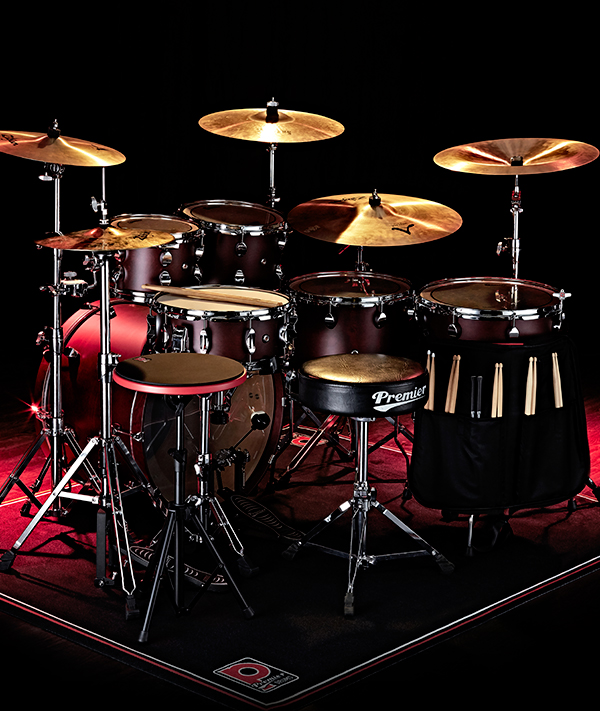
The drums are an essential element in many musical mixes, providing the rhythmic foundation and energy for the song. To make each drum component (kick, snare and cymbals) sound clear and defined in the mix, it is crucial to use proper equalization techniques. The following are EQ techniques to individualize each of these elements.
Kick Drum
Frequency Enhancement
The kick drum is the pulse of the drum kit and needs to have presence and depth without masking other elements. To enhance the body of the kick drum, focus on the frequencies around 60 Hz to 100 Hz. A slight boost in this range can add weight and power to the kick drum.
The attack of the kick drum is generally between 3 kHz and 5 kHz. Boosting these frequencies can add clarity and definition, allowing the kick drum to cut through the mix without sounding too boomy.
Removing Problem Frequencies
Use a high pass filter to remove rumble and unnecessary low frequency noise below 40 Hz. This cleans up the kick drum sound and prevents masking of other low frequencies in the mix.
Frequencies between 200 Hz and 400 Hz can contribute to a “boxy” sound. Attenuating this area slightly can improve clarity and make the kick drum sound more defined.
Snare Drum
Frequency Enhancement
The snare needs to have a good balance between body and crack. Boosting the frequencies around 150 Hz to 250 Hz can add warmth and body to the snare, ensuring that it sounds full and powerful.
The “crack” of the cabinet, which is crucial to its definition, is between 1 kHz and 2 kHz. Enhancing these frequencies can make the cabinet sound more present and defined in the mix.
To add sparkle and air to the snare, a slight boost around 6 kHz to 8 kHz can be beneficial. This provides a more lively and detailed sound.
Eliminating Problem Frequencies
As with the kick drum, a high pass filter can be used to remove low frequency noise below 100 Hz. This helps maintain clarity and keeps the snare from interfering with other low frequency elements.
If the snare sounds “boxy” or nasal, attenuating around 400 Hz to 600 Hz can improve clarity and make the snare feel more open and defined.
Cymbals
Frequency Enhancement
Cymbals should add brightness and detail without being too dominant. Boosting frequencies around 8 kHz to 12 kHz can add air and sparkle to the cymbals, making them sound alive and detailed.
To emphasize attack and presence, a slight boost in the 4 kHz to 6 kHz range can be helpful. This helps the cymbals stand out in the mix without sounding too harsh.
Removing Problem Frequencies
Use a high pass filter to remove low frequency noise below 200 Hz. This helps clean up the sound of the cymbals and avoids masking other elements of the drums and mix.
If the cymbals sound too harsh or hissy, attenuating slightly around 6 kHz to 8 kHz can soften the sound and make them blend better into the mix.
Become an expert in equalization with the recommended book “ EQ in Music Production” (click on the image to go to the link):

Additional Techniques
Dynamic EQ
Dynamic EQ can be useful for handling problematic frequencies that only appear at certain times. For example, if certain cabinet hits are too resonant, a dynamic EQ can attenuate those frequencies only when necessary, maintaining the natural character of the cabinet.
Compression and EQ
Compression is a valuable complementary tool when EQing drum elements. Using a compressor to control dynamics can ensure that each drum component maintains a consistent presence in the mix. Compression helps level out peaks and can make EQ adjustments more effective.
Panning and Spacing
EQ is only part of the process of individualizing drum elements. Panning also plays a crucial role. Placing the kick drum and snare in the center, while panning the cymbals to the sides, can help create a sense of space and separation in the mix.
Final Evaluation
After applying EQ and compression, listen to the drums in the context of the entire mix. Make sure that each element of the drums sounds clear and defined without interfering with other instruments. Switch between different monitoring systems and listen in different environments to ensure that the drums sound good in all of them.