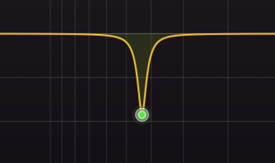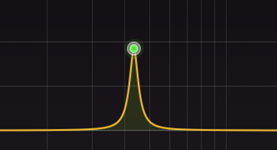
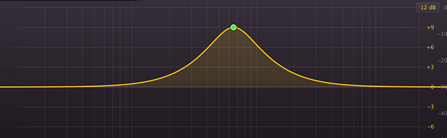
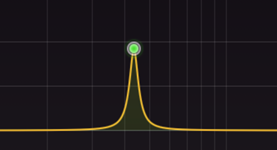
In this type of EQ, we have a factor called Q factor. The Q factor is going to determine the width or narrowness of the bell. If the Q of the bell is high, then the bell shape is very narrow and sharp. If the Q is low, the curve is wide and the sound is softer. In this image we see an image with a high Q factor:
Now we will see a bell with a low Q factor:

We will increase or decrease the Q factor depending on how large we want the frequency range to be, to boost it or cut it (decrease it). Narrow bells will create sharper and more abrupt equalizations, recommended when we have to repair some small and specific frequency. The wide bell Qs will be used for more subtle and less defined EQs, to boost a group of frequencies and give an overall character to the sound. This gives a “rounder” and “warmer” sound.
Remember that this is also used for frequency cuts. A great little rule of EQ is: “it is always better to cut (decrease), than to boost (boost).”
Become an expert in equalization with the recommended book “ EQ in Music Production” (click on the image to go to the link):