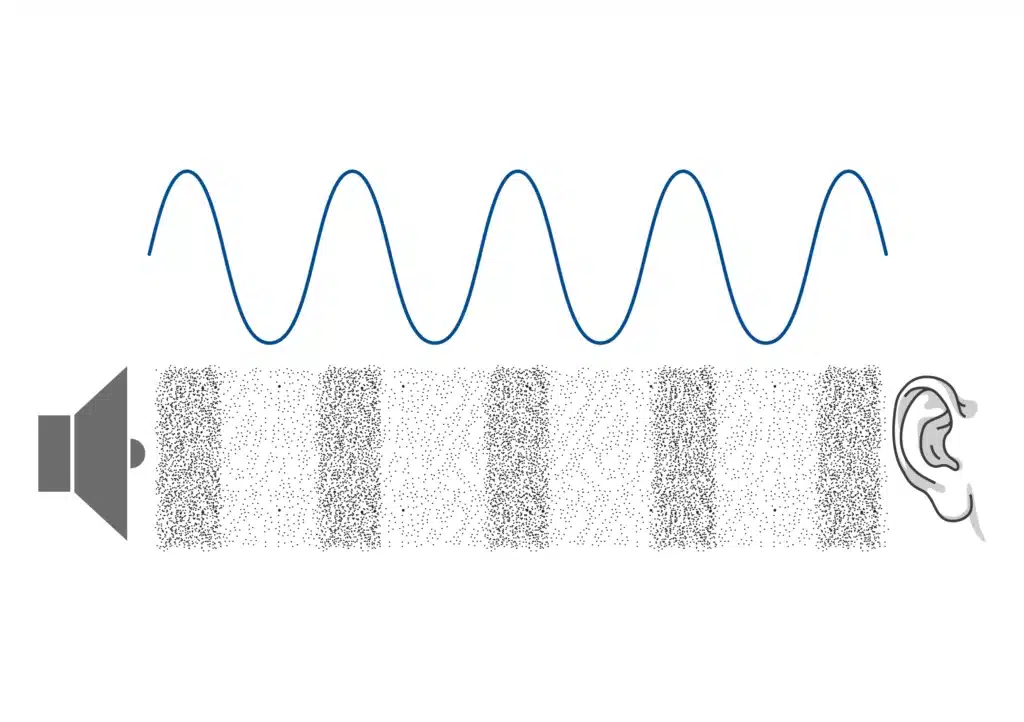
In the vast world of music production, understanding frequencies is crucial to shaping and sculpting sound. Within this spectrum, fundamental frequencies play an essential role, acting as the foundation upon which the overtones and timbre of a sound are built.
What are fundamental frequencies?
The fundamental frequency is the lowest frequency in a complex periodic sound. It is the frequency that we perceive as the main pitch of a note. When a musical instrument produces a sound, it does not emit just one frequency, but a combination of frequencies. The lowest of these frequencies is the fundamental, and the others, which are integer multiples of the fundamental, are known as harmonics or overtones.
Practical example:
If we play a note A (A) on a piano, the fundamental frequency will be 440 Hz. The overtones will be 880 Hz (2 x 440 Hz), 1320 Hz (3 x 440 Hz), 1760 Hz (4 x 440 Hz), and so on.
Importance in music production:
- Pitch identification: The fundamental frequency defines the pitch of a sound. It allows us to differentiate between a C and a G, for example.
- Basis for harmonics: Harmonics, which give richness and complexity to the sound, are based on the fundamental frequency. The relative intensity of these overtones determines the timbre of the sound.
- Equalization: Understanding where the fundamental frequency of an instrument is located is crucial for proper equalization. Boosting or attenuating the fundamental frequency can drastically change the character of a sound.
- Mixing: In mixing, it is important to make sure that the fundamental frequencies of different instruments do not clash with each other, to avoid a muddy or “muddy” sound.
- Sound design: In synthesis and sound design, manipulation of the fundamental frequency and its harmonics is a common technique for creating new sounds.
Become an expert in equalization with the recommended book “ EQ in Music Production” (click on the image to go to the link):

Examples of fundamental frequencies in common instruments:
- Kick Drum: Generally between 40 Hz and 80 Hz.
- Bass (Bass): Depending on the register, from 40 Hz to approximately 200 Hz.
- Guitar: Depending on tuning and register, from 80 Hz to approximately 1 kHz.
- Vocals: Depending on the singer, from about 100 Hz to about 1 kHz.
How to work with the fundamental frequencies in the mix:
- Using equalizers: A parametric equalizer allows precise control over the fundamental frequency. It can be used to boost it and give the sound more presence, or to attenuate it if it is causing problems in the mix.
- High-Pass Filters: These filters are essential for cleaning up sub-bass frequencies that can muddy the mix and detract from clarity. They are generally applied to instruments that do not need as much information in the lower frequencies, such as guitars, vocals or keyboards.
- Careful monitoring: It is essential to listen to the mix on different audio systems to ensure that the fundamental frequencies translate well and do not create problems in different playback environments.
Fundamental frequencies are the foundation of sound in music. Understanding how they work and their importance is essential for any music producer looking to create clear, balanced and punchy mixes. By mastering the handling of the fundamental frequencies, a world of creative possibilities opens up in music production.