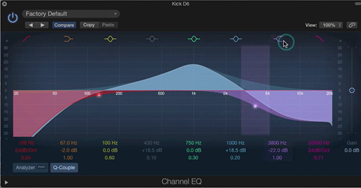
Once we have assimilated the different parts and elements of an EQ, we can now start using them.
Steps to start EQing:
1- First you must recognize what fundamental frequencies exist in the instruments, and once recognized, you can begin to discern which frequencies need to be attenuated and which need to be prioritized in each track. By recognizing and reducing the frequencies that are left over or that we don’t need, we will be able to give the mix a very important space so that all the instruments have their place.
2- As a next step, we will see and think about what sound we want to achieve. How do we want the mix to sound? What style do we want to give to the sound in general and to the instruments in particular? We could say “I want this guitar to sound brighter”, or “I want the bass to sound more distorted”, or “I want the song to have an 80’s pop sound”. We need to start pinpointing what we want to achieve and what we should do to achieve it.
3. Now that we have all this clear, we can start to take action. The first thing to do is to remove and lower the frequencies that we don’t need and that interfere with other instruments. For example: remove bass frequencies from a guitar, remove mid-high frequencies from a bass, or clean the drums of annoying or dissonant frequencies. These actions you must discern for yourself based on the song you are mixing. With this step we will be able to: Give space to the instruments, correct annoying frequencies, clean the instruments of frequencies that do not contribute anything to the sound.
Become an expert in equalization with the recommended book “ EQ in Music Production” (click on the image to go to the link):

4. Once we have the instruments “clean”, we can now start making small adjustments, boosting and boosted frequencies that we want to highlight in each instrument. For example, we might want to bring out the presence of a voice, so we would slightly boost the frequencies around 5000 Hz.
Useful tip: in equalization, it is not advisable to exaggerate the boost or frequency increases. It is better to make the boosts with subtlety and care. It is always preferable to reduce rather than increase. We should always base ourselves on what actions we should take to achieve the sound we want. For example: If we want a kick drum to sound with more punch, then we could look at slightly increasing the frequencies around 50 Hz.