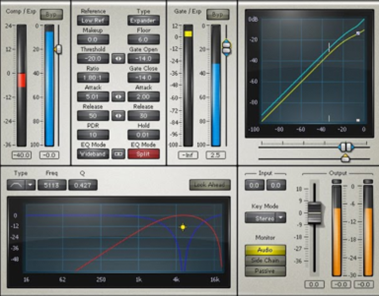
Sidechain compression is a little different. It is a type of compression where the effect level on one instrument is controlled by the volume level of another instrument. A common example would be to make the compression level on a bass guitar controlled by the output volume of the kick drum. So when the kick drum kicks in, the bass is compressed further so that it can continue to cut through the mix.
In simple words, we use the sound of one instrument as a guide to compress another. For example: we have a vocal track, and a music track. We want that, when the voice is heard, the volume of the music is reduced, and when the voice stops, the music resumes its usual volume.
The voice track will act as a compression trigger on the music track. Then, the parts where the voice is heard within a certain threshold will compress the parts of the music playing at that time.
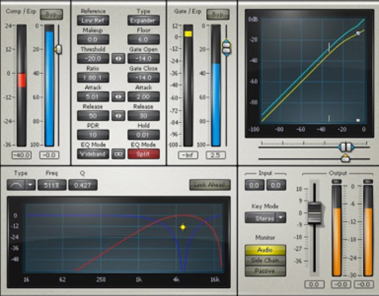
Sidechain compression is useful when you don’t want certain instruments to cover others. Or that two instruments compete too much with each other, giving them a priority space. For example: use a sidechain compressor on a kick drum track to control a bass track: so when the kick drum plays, the bass will be compressed slightly, leaving room for the kick drum.
Become an expert in compression with the recommended book “ Compression in Music Production” (click on the image to go to the link):
