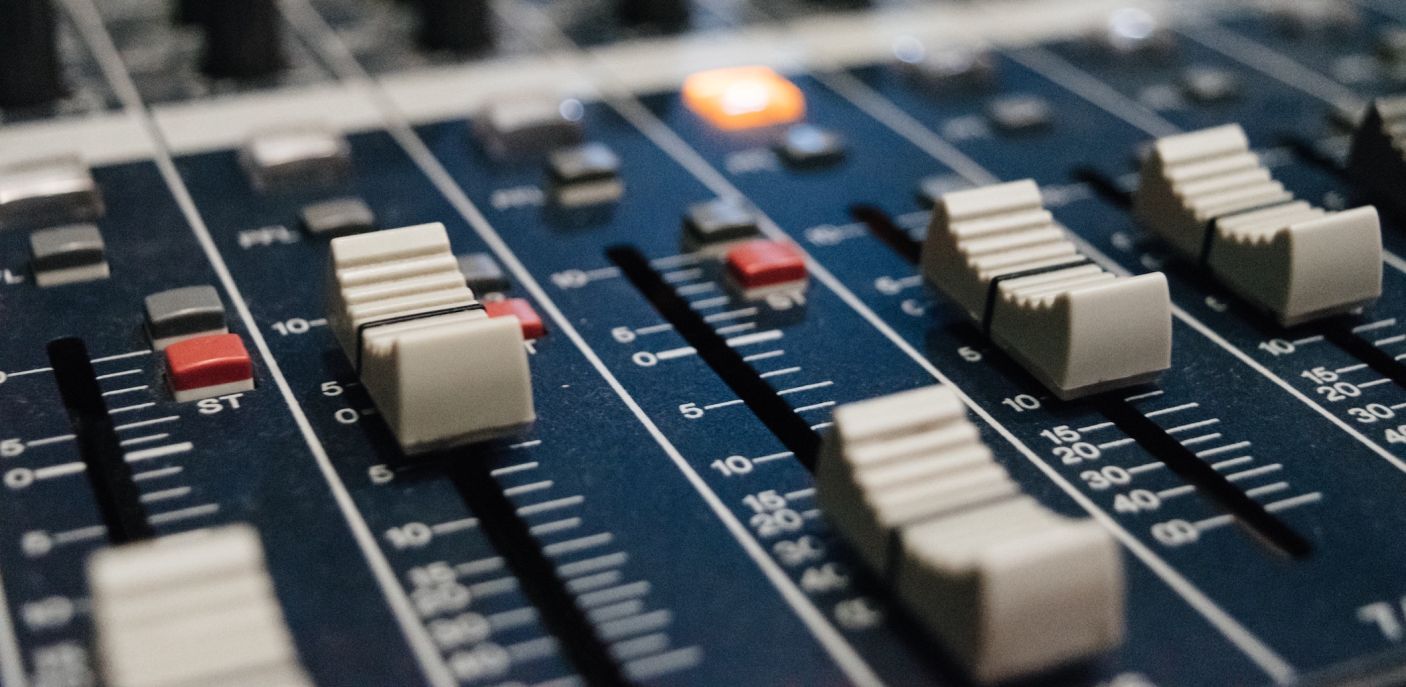
One of the biggest difficulties in audio mixing is getting all the instruments to sound clear and defined, without “stepping on each other’s toes”. Creating space in the mix means giving each element its own place in the frequency spectrum, in the stereo panorama and in depth, thus achieving a mix with clarity, separation and punch.
Frequency Spectrum Management (EQ):
EQ is critical to avoid frequency buildup and create space for each instrument.
- Subtractive EQ: Instead of boosting frequencies in each instrument, start by attenuating problematic or unnecessary frequencies. Look for areas where instruments overlap and slightly attenuate competing frequencies. For example, if the bass and guitar share a lot of low frequencies, attenuate the bass on the guitar a bit to give the bass room.
- Filters: High pass filters (HPF) and low pass filters (LPF) are essential tools. Use an HPF to remove unnecessary sub-bass frequencies on instruments that don’t require them, such as guitars, vocals or keyboards. This cleans up the mix and prevents “mud” in the low frequencies. An LPF can help clean up high frequencies that do not provide relevant information and can generate noise.
- Frequency Sweep: Uses an EQ with a narrow band and substantial boost to “sweep” frequencies to find annoying resonances or areas where an instrument sounds muddy. Once the problem frequency is identified, attenuate it slightly.
2. Stereo Panning:
Panning consists of placing instruments in the stereo field, creating a wider, separate sound image.
- Separation: Avoid centering all instruments. Pan some to the left and some to the right to create separation and avoid clumping in the center of the mix.
- Balance: Make sure the mix is balanced in the stereo panorama. Don’t concentrate all the instruments on one side.
- Key Instruments: Major elements, such as lead vocals, kick drum and bass, are usually kept in the center.
- Complementary Instruments: Rhythm guitars, keyboards, backing vocals and other elements can be panned to the sides.
3. Depth (Reverb and Delay):
Reverb and delay create a sense of space and depth in the mix.
- Reverb: Use different types of reverb (room, hall, plate) to create different feelings of space. A short reverb can add ambience without muddying the mix, while a long reverb can create a feeling of greater spaciousness. Use sends to reverb buses to have more precise control over the amount of reverb on each instrument.
- Delay: Delay can be used to create separation and depth. A short delay can thicken a sound, while a longer delay can create interesting echoes and effects. As with reverb, use sends to delay busses for greater control.
- Depth with EQ: Attenuating the high frequencies of an instrument can make it sound further away in the mix, creating a sense of depth.
4. Dynamics Management (Compression):
Compression helps control the dynamic range of instruments, making softer parts more audible and louder parts more controlled.
- Subtle Compression: Uses gentle compression to control volume peaks and give instruments more consistency, without “squashing” the dynamics.
- Parallel Compression: This technique consists of duplicating a track, heavily compressing the copy and then mixing it with the original track. This adds punch and body without sacrificing dynamics.
5. Automation:
Automating volume, panning and effects allows you to create dynamic variations and keep the listener’s interest.
- Volume Automation: Automates the volume of instruments to highlight certain parts or create smooth transitions.
- Panning Automation: Automates panning to create interesting stereo movements.
- Effects Automation: Automates reverb and delay parameters to create variations in depth and space.
Additional Tips:
- Listen carefully: Use good monitors or studio headphones and trust your ears.
- Compare with references: Listen to professional mixes of similar songs to get an idea of what your mix should sound like.
- Less is more: Avoid drastic adjustments. Often, small changes can make a big difference.
- Work in layers: Start by balancing the main elements (drums, bass, vocals) and then add the other instruments, creating space for each.
Creating space in the mix is an ongoing process that requires practice and patience. By applying these techniques, you will be able to achieve clearer, more defined and impactful mixes.