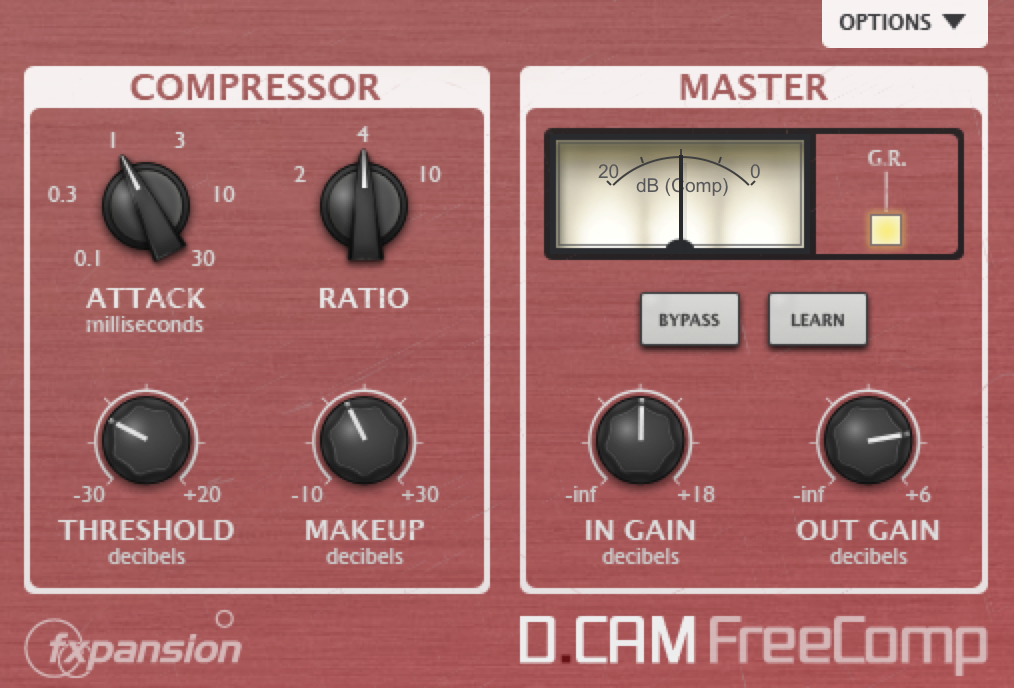
Audio compression has evolved from analog devices to sophisticated digital plug-ins, each with its own characteristics and uses. The following explores the key differences between analog and digital compressors, and provides examples of each type.
Key Differences
Technology and Operation
- Analog Compressors:
- Examples: LA-2A (optical), 1176 (FET), Fairchild 670 (vari-mu).
- The audio signal passes through electronic circuitry, which often adds coloration and character to the sound.
- They use physical components such as vacuum tubes, transistors and optics to control the dynamics of the audio.
- Digital Compressors:
- Examples: Waves SSL G-Master Bus Compressor, FabFilter Pro-C2, Universal Audio UAD plugins.
- They can emulate the behavior and sound of analog compressors.
- They offer greater precision and flexibility in parameter control.
- They use mathematical algorithms to process the audio signal within a software environment.
2. Sound and Colorization
- Analog Compressors:
- Variation between units can be significant due to component tolerances.
- The sound is often described as “warm”, “thick” or “musical”.
- They add coloration and harmonic distortion due to the nature of the electronic components.
- Digital Compressors:
- Consistency between instances of the same plugin is seamless due to the digital nature.
- They may include algorithms that emulate the coloration of specific analog compressors.
- They are more transparent, allowing accurate compression without adding unwanted coloration.
Become an expert in compression with the recommended book “ Compression in Music Production” (click on the image to go to the link):

3. Flexibility and Control
- Analog compressors:
- Non-linear process, often affected by factors such as temperature and aging of components.
- Manual adjustments and fewer options for automation and recall (saving and recalling exact settings).
- Controls are often more limited and less precise.
- Digital Compressors:
- May include additional features such as multiband compression, advanced sidechain, and graphical display of gain reduction.
- They allow automation and easy recall of settings in DAW projects.
- They offer extremely precise control over all parameters.
4. Cost and Accessibility
- Analog compressors:
- Require maintenance and can be sensitive to the physical environment (temperature, humidity).
- Generally more expensive due to physical components and construction.
- Digital Compressors:
- Require no physical maintenance and can be used on multiple projects simultaneously.
- More accessible and economical, with many plugins available at reasonable prices.