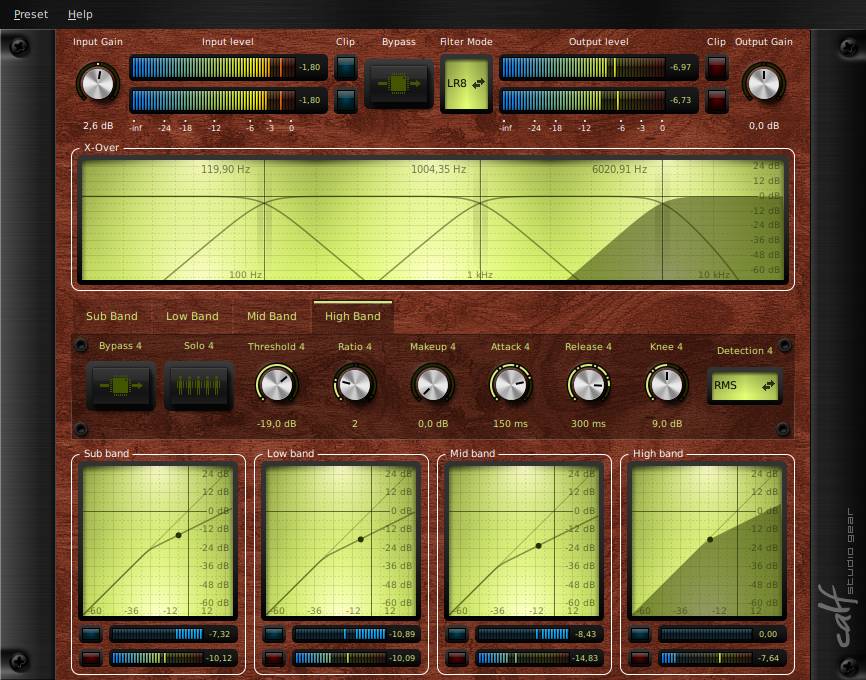
As a first tip we could say that you should listen to the mix as a whole (all the tracks at the same time), and try to perceive the dynamics of each sound. Play the mix at a pleasant and moderate volume and listen carefully: if you notice that there is a sound that sometimes stands out from the rest or is below the rest, then you will realize that that element needs some compression. Obviously, many times, these gain dips and rises are intentional, in which case it is not necessary to compress them or at least not compress them too much. But when you notice that a sound is unstable and that this is not the artist’s intention, consider starting compression.
Use the compressor sparingly. If you use too much, the mix will be rough and flat. Less is always better than more. A small amount of compression is preferable to an inordinate amount that will ruin the mix.
Attack and release
When the mix features fast sounds, such as a drum kit, or the beat of a rap track, the compressor should also act fast, using the time of the attack and release parameter. Be careful at the same time not to completely remove all the transients, as this will leave the mix without punch and make it sound flat and lifeless. Try different attack times until the sound suits you best. A short release will give a sound with more presence, and a long release will make it more controlled. The point is to find the balance between compression and presence.
Become an expert in compression with the recommended book “ Compression in Music Production” (click on the image to go to the link):

Character and style
You should know that each compressor has a particular color and a unique character. It is advisable to try different compressors and become familiar with their sound. In this way, we will be able to apply a different compressor to each song or instrument according to the type of sound we are looking for at that moment.