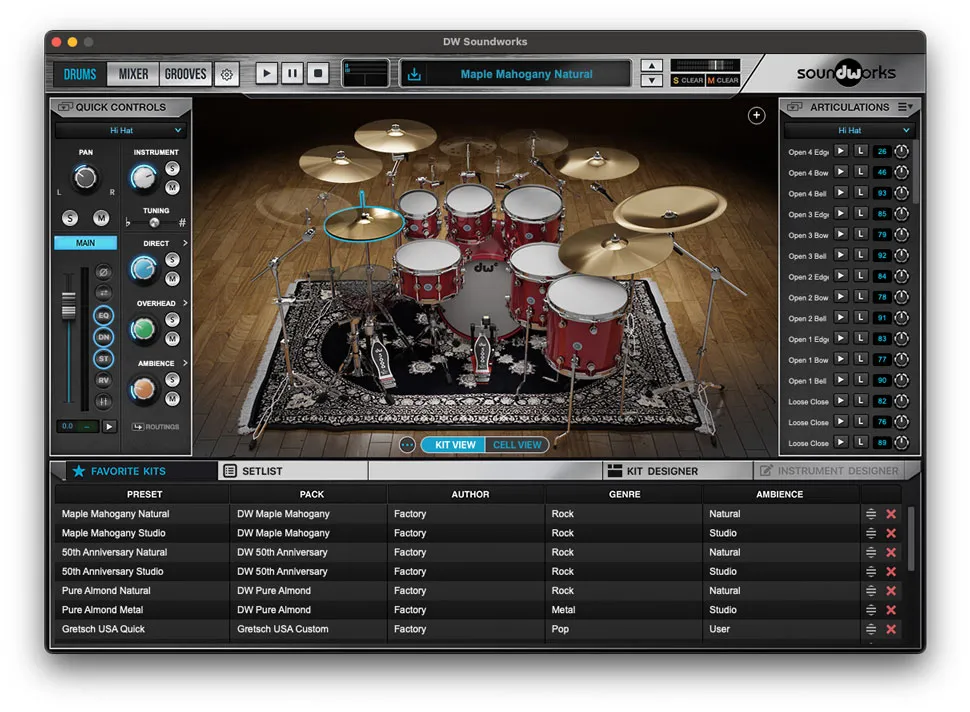
The drums are the rhythmic heart of most songs, and good EQ is essential for them to sound powerful, clear and blend well into the mix. This article will guide you through the key techniques and considerations for equalizing both acoustic and electronic drums.
Part 1: Equalizing Acoustic Drums
Acoustic drums, being an ensemble of several instruments, require a more detailed approach to equalization.
Understanding the Acoustic Drum Frequency Spectrum:
- Bass Drum (20-250 Hz):
- Sub-bass (20-60 Hz): “Weight” and “depth”.
- Bass (60-100 Hz): “punch” and “punch”.
- Low Mids (100-250 Hz): “Body” and “warmth”.
- Lows (200 Hz – 10 kHz):
- Bass (200-500 Hz): “Body” and “depth.”
- Mid (500 Hz – 2 kHz): “Presence” and “attack”.
- Treble (2 kHz – 10 kHz): “Sparkle” and “brilliance”.
- Toms (100 Hz – 5 kHz): Vary according to the size of the tom. Larger toms have more bass, while smaller toms have more mids and treble.
- Cymbals (2 kHz – 20 kHz):
- High Mids (2-5 kHz): “Brightness” and “cut”.
- Treble (5-20 kHz): “Air” and “sizzle”.
Equalization Techniques for Acoustic Drums:
- Bass drum:
- Enhance “punch”: A slight boost between 60-100 Hz can add punch.
- Add “weight”: Gently boost between 30-50 Hz.
- Control the “boom”: Attenuate between 200-400 Hz if it sounds “muddy”.
- Add “click”: A small boost around 3-5 kHz can improve attack.
- Box:
- Add “body”: Enhance between 200-400 Hz.
- Add “snap”: Enhance between 5-8 kHz.
- Control annoying resonances: Sweep with a narrow band and attenuate problematic frequencies.
- Toms:
- Enhance the fundamental frequency: Find the frequency that resonates the loudest on each tom and enhance slightly.
- Control decay: Attenuating low frequencies can shorten the tom’s sustain.
- Cymbals:
- Add “brightness”: Gently boost from 8-10 kHz.
- Control harshness: Attenuate between 5-7 kHz if they sound harsh.
- High Pass Filter (HPF) on the overheads: To clean up the low frequencies and give space to the kick drum and snare.
Part 2: Electronic Drum Equalization
Electronic drums, being composed of samples or synthesized sounds, offer more control from the start. However, EQ is still important to shape the sound and make it blend into the mix.
Electronic Drum EQ Considerations:
- Samples Quality: A good sample will already have a good tonal foundation. Don’t try to fix a bad sample with EQ.
- Focus on Genre: Different genres of music have different preferences for the sound of electronic drums. For example, trap music tends to have drums with a lot of sub-bass, while house music tends to have drums that are more focused on the low-mid range.
Become an expert in equalization with the recommended book “ EQ in Music Production” (click on the image to go to the link):

Equalization Techniques for Electronic Drums:
- Bass Drum:
- Focus on Sub Bass: If you are looking for a strong sub-bass kick drum, boost between 30-50 Hz.
- Add punch: Boost between 80-120 Hz.
- Control the “tail”: Attenuate between 150-250 Hz if the kick drum has too long a sustain.
- Snare:
- Add “snap”: Enhance between 4-7 kHz.
- Add “body”: Boost between 200-300 Hz.
- Hi-Hat/Platos:
- Add “brightness”: Enhance from 10 kHz.
- Control the harshness: Attenuate between 6-8 kHz if they sound shrill.
General Tips for Equalizing Drums (Acoustic and Electronic):
- Listen in Context: Always EQ the drums within the full mix.
- Less is More: Start with subtle adjustments and increase the intensity only if necessary.
- Use References: Compare your EQ with professional songs of the same genre.
- Consider Compression: Compression affects tonal balance, so adjust the EQ after compressing.
- Automation: You can automate the EQ to create variations throughout the song.
- High Pass Filter (HPF): This is almost always useful on every drum element to clean up unnecessary low frequencies.
- Frequency Sweep: Uses a narrow band with gain to find problematic frequencies and then attenuate them.
Practical Examples:
- Acoustic bass drum without “punch”: Enhance between 80-100 Hz.
- Electronic snare without snap: Boost between 5-6 kHz.
- Overheads with too much resonance in low mids: Attenuate between 200-400 Hz.
Equalizing drums, whether acoustic or electronic, is a process that requires practice and a good ear. By understanding the frequency spectrum of each element and applying the techniques described above, you will be able to make your drums sound professional and integrate perfectly into your mixes. Remember that there are no fixed rules, and the best EQ will depend on the context of the song and the sound you are looking for.