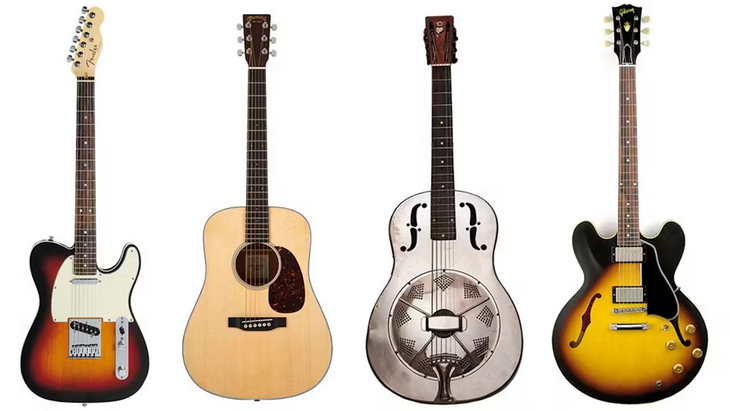
Equalization is a fundamental tool for shaping the sound of the guitar, whether acoustic or electric. It allows you to enhance the desired frequencies, attenuate the problematic ones and make the guitar blend perfectly into the mix. This guide will provide you with the knowledge and techniques needed to effectively EQ guitars.
Understanding the Guitar Frequency Spectrum:
It is crucial to understand where the key frequencies of the guitar are located:
- Bass (80-250 Hz): they bring “body” and “warmth” to the sound. Too much bass can muddy the mix.
- Mid Bass (250-500 Hz): Influences “presence” and “definition”. Too much in this area can sound “muddy”.
- Mid (500 Hz – 2 kHz): Contains most of the guitar’s fundamental information. They affect “clarity” and “projection”.
- High Mids (2 kHz – 6 kHz): Provide “attack”, “sharpness” and “presence”. Too much energy here can sound shrill.
- Treble (6 kHz – 20 kHz): Provides “brightness”, “air” and “space”. Too much treble can sound “shrill”.
Acoustic Guitar Equalization:
The main goal when equalizing an acoustic guitar is to preserve its natural sound and prevent it from sounding “boxy” or “nasal”.
- High Pass Filter (HPF): Apply a HPF around 80-120 Hz to remove unnecessary sub-bass frequencies that can muddy the mix.
- Controlling “boom”: If the guitar sounds too low or “boomy”, gently attenuate between 150-250 Hz.
- Adding “body”: If the guitar sounds thin or lacking in body, slightly boost between 200-400 Hz.
- Adding “sparkle”: A slight boost around 7-10 kHz can add “air” and “sparkle”, but be careful not to overdo it.
- Controlling the “pick sound”: If the pick sound is too pronounced, attenuate between 4-6 kHz.
Electric Guitar Equalization:
Equalization of electric guitars depends a lot on the musical style and sound you are looking for.
- Clean Guitars:
- Enhancing “warmth”: A slight boost between 100-200 Hz can add warmth.
- Adding “brightness”: A gentle boost around 5-8 kHz can add brightness.
- Controlling “nasal”: Attenuate between 500 Hz – 1 kHz if the sound is too nasal.
- Guitars with Distortion:
- Controlling the bass: Attenuate frequencies below 100 Hz to keep the mix from getting muddy.
- Adding “body” and “punch”: Enhance between 200-400 Hz.
- Controlling “harshness”: Attenuate between 2-4 kHz if distortion sounds too aggressive.
- Adding “definition”: A slight boost around 5-7 kHz can improve definition.
General Tips for Equalizing Guitars:
Become an expert in equalization with the recommended book “ EQ in Music Production” (click on the image to go to the link):

- Listen in Context: Always EQ the guitar within the entire mix. The sound should complement the other instruments.
- Less is More: Start with subtle adjustments and increase the intensity only if necessary. Often, small changes make a big difference.
- Use References: Compare your EQ with professional songs of the same genre for a guide.
- Frequency Sweep: Use a narrow band with gain to find problem frequencies and then attenuate them.
- Consider Amplification: The sound of the amp plays a crucial role in the sound of the electric guitar. Adjust the amp’s EQ before using the EQ in the mix.
- Consider Microphone Position: The position of the microphone in relation to the amp or acoustic guitar influences the sound captured. Experiment with different positions to get the best sound from the source.
- Automation: You can automate the EQ so that the guitar sound changes throughout the song, for example, boosting the mids in a solo.
- Use a Spectrum Analyzer in Moderation: A spectrum analyzer can be a useful tool for visualizing frequencies, but rely primarily on your ears.
Practical examples:
- Acoustic guitar with “boxy” sound: attenuate between 200-300 Hz.
- Electric guitar with distortion that is too “muddy”: Attenuate between 100-200 Hz.
- Lead guitar that does not sound good in the mix: Boost between 1-3 kHz.
Guitar EQ is a crucial process in achieving a professional sound. By understanding the frequency spectrum and applying the techniques described in this article, you will be able to sculpt the sound of your guitars and make them blend seamlessly into any mix. Remember that practice and experimentation are key to developing a good ear and mastering the art of equalization.