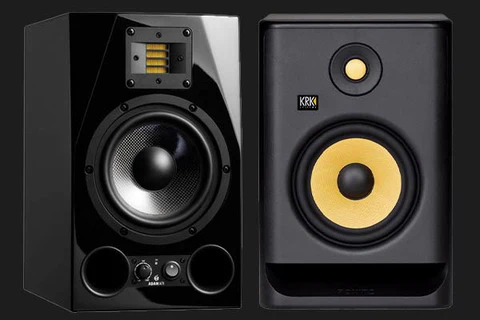
how do you choose the right monitor for you? Here are some considerations:
- Avoid the temptation to imitate: Just as a guitarist shouldn’t choose his instrument just because his idol uses it, you shouldn’t select your monitors based solely on what other professionals use. Your choice should reflect your specific needs, your workspace and your musical style.
- Listen before you buy: Imagine you are choosing a new pair of shoes for a marathon. Would you buy them without trying them on? Your monitors are the “running shoes” in which you will run your music marathon. Take the time to listen to them in different conditions. If possible, look for a specialized store where you can audition them extensively.
- Trust your ears: At the end of the day, you are the one who will be spending countless hours in front of these monitors. Choose the ones that make you feel comfortable and confident in your mixing decisions.
Remember, choosing monitors is a personal process. It’s not just about technical specifications, but about finding a tool that suits the way you work and listen. With time and practice, your monitors will become an extension of your ears, allowing you to create mixes that sound great on any playback system.
Imagine you are about to choose a musical instrument that will accompany you throughout your career. That’s how important the selection of your studio monitors is. It’s not just about buying a piece of equipment, it’s about finding a loyal ally for your sonic journey. Here is a guide to sharpen your perception and choose wisely:
- Harmonic Balance: When listening to your monitors, look for a balanced frequency balance, like a well-tuned orchestra. Pay special attention to the mid-range region (between 1.5 kHz and 2.5 kHz), where many monitors can have problems. Listen to how the cymbals sound in the highs, the vocals and guitars in the mids, and the bass and kick drum in the lows. Each element should have its place without overshadowing the others.
- Consistency at Any Volume: A good monitor is like a versatile singer who maintains his tone in both whispers and fortissimos. Make sure the frequency balance remains constant regardless of volume. This consistency is crucial to achieving mixes that sound good on any playback system.
- Power without Distortion: Look for monitors that can reach high levels without losing clarity. However, be aware that some active monitors have built-in limiters that, while preventing distortion, may restrict the maximum volume. Make sure they can meet your volume needs without compromising quality.
- Love at First Listen: Don’t settle for less than aural love. You will spend countless hours with these monitors, so they should captivate you from the start. If you don’t fall in love with the sound, keep looking.
- The Knowledge Test: Carry music you know like the back of your hand. Use high quality recordings that you have heard on a variety of systems. This will give you a solid reference point for evaluating monitor performance. Avoid MP3s and opt for high-resolution sources such as CDs or 24-bit files.
Become an expert in monitoring with the recommended book “Acoustings and monitoring in Music Production” (click on the image to go to the link):

Remember, choosing monitors is a deeply personal process. It’s not just about technical specifications, but about finding a companion that complements your work style and sharpens your auditory perception. Take the time you need to make this decision. Listen carefully, compare different options and, above all, trust your listening instincts.