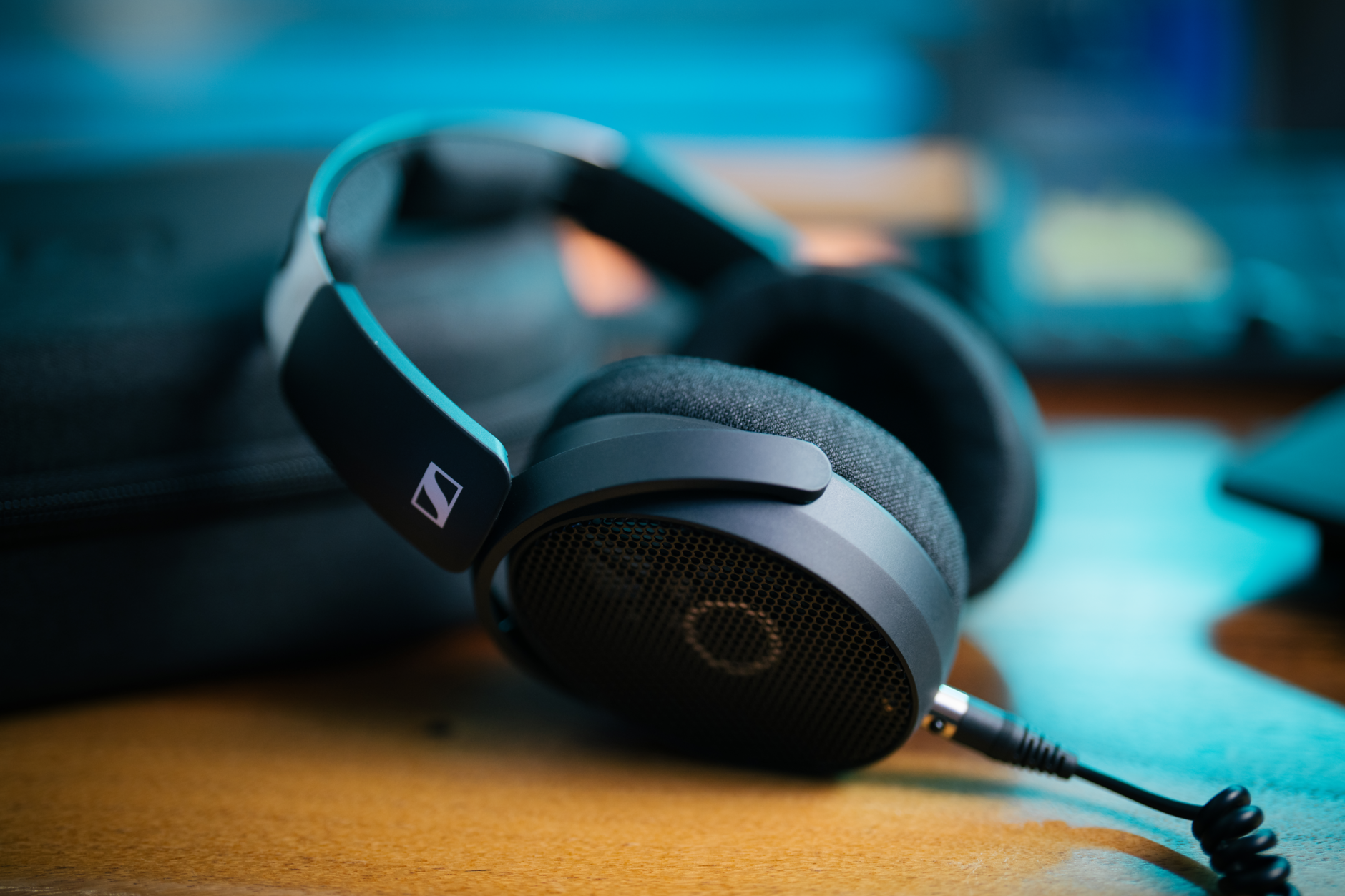
There are times when it is impossible to use monitors (during the night, for example, if you have sleeping neighbors). Many times we are in an acoustically difficult environment (such as a room that is too small), or we simply cannot afford to buy a pair of monitors of sufficient quality. The use of headphones is possible, but there are some caveats to keep in mind.
Advantages of Headphone Monitoring
Headphone monitoring offers several significant advantages, especially in environments where studio monitors are not feasible or where additional reference is required. One of the main advantages is the isolation capability. Headphones, especially closed-back types, isolate the user from external noise, allowing detailed and focused listening. This is particularly useful in home studios or in noisy environments where acoustic conditions are not ideal.
Another advantage is portability. The headphones allow sound engineers and producers to work on their projects anywhere, without the need for a fixed studio environment. This is invaluable for musicians and producers who need to work while on the road or in limited spaces.
The headphones also eliminate the influences of room acoustics. Unlike studio monitors, where the acoustic characteristics of the room affect the perception of sound, headphones provide a more direct reference without environmental interference. This allows users to hear fine details and nuances that may be lost in a conventional monitoring environment.
In recording situations, headphones are essential. They allow musicians to hear the backing track without the sound from the monitors leaking into the microphones, ensuring a clean recording without sound contamination. In addition, headphones with real-time monitoring allow artists to hear their own voice or instrument in real time, improving their performance and accuracy during recording.
Disadvantages of Headphone Monitoring
Despite its advantages, headphone monitoring also has some disadvantages that must be considered. One of the main limitations is the lack of acoustic space. Headphones cannot replicate the three-dimensional sound field obtained with studio monitors, which can make it difficult to perceive the stereo image and depth of the mix. This can result in mixes that do not translate well on conventional playback systems.
Prolonged use of headphones can cause listening fatigue. At high volume levels, headphones can be more tiring on the ears than studio monitors, which can affect the ability to make accurate decisions during long mixing or recording sessions. It is crucial to take regular breaks to avoid ear fatigue and maintain accurate listening.
Another disadvantage is the frequency response of the headphones. Although many high-quality headphone models offer a flat frequency response, the perception of bass and treble frequencies can differ from that of studio monitors. Low frequencies may sound exaggerated or, conversely, insufficient, depending on the headphone model. This can lead to mixing decisions that do not translate well to other playback systems.
Headphones can also lack the physical sensation of sound experienced with studio monitors. Vibrations and the physical impact of low frequencies, which are integral to the listening experience in a conventional monitoring environment, are not perceived in the same way in headphones. This can cause sound engineers to underestimate or overestimate certain frequencies during mixing.
Become an expert in monitoring with the recommended book “Acoustings and monitoring in Music Production” (click on the image to go to the link):

Finally, the lack of cross-reference is a limitation. Monitoring exclusively with headphones can lead to unbalanced mixes, as you don’t have the perspective of what the mix will sound like in a conventional listening environment. It is advisable to use headphones as an additional reference along with studio monitors to get a more complete and balanced view of the mix. First, listening with headphones for more than a couple of hours will lead to hearing fatigue, i.e., with headphones you will be able to mix and listen for less time than with monitors.
Second, after a while, wearing headphones becomes uncomfortable for your ears or head.
Third, studio headphones tend to sound too perfect and color the mix slightly. You may have some difficulty detecting subtle problems with frequencies or the stereo field.
That said, we can say that headphones are excellent for detecting small glitches such as clicks, pops, distortion, noise, and so you can correct these things with precision.
In short, it is possible to mix with headphones, although it is not the optimal choice. Just try to buy models with as flat a frequency as possible, and have other listening sources (speakers, monitors, etc.).