Closed Headphones
Closed headphones are a popular choice in music production due to their ability to provide excellent isolation. This type of headphone has cups that completely seal the ears, preventing sound from escaping and significantly reducing the ingress of external noise. This feature makes them ideal for recording situations, where it is crucial to prevent the sound of the backing track from leaking into the microphones. In addition, the isolation they provide allows musicians and producers to concentrate on audio details without environmental distractions.
Closed-back headphones are especially useful in noisy environments or home studios where acoustic conditions may not be ideal. They allow users to hear a clear and detailed representation of the sound, which is essential for recording and editing. However, due to their design, closed headphones can cause listening fatigue during prolonged sessions, as complete sealing can result in additional pressure on the ears.
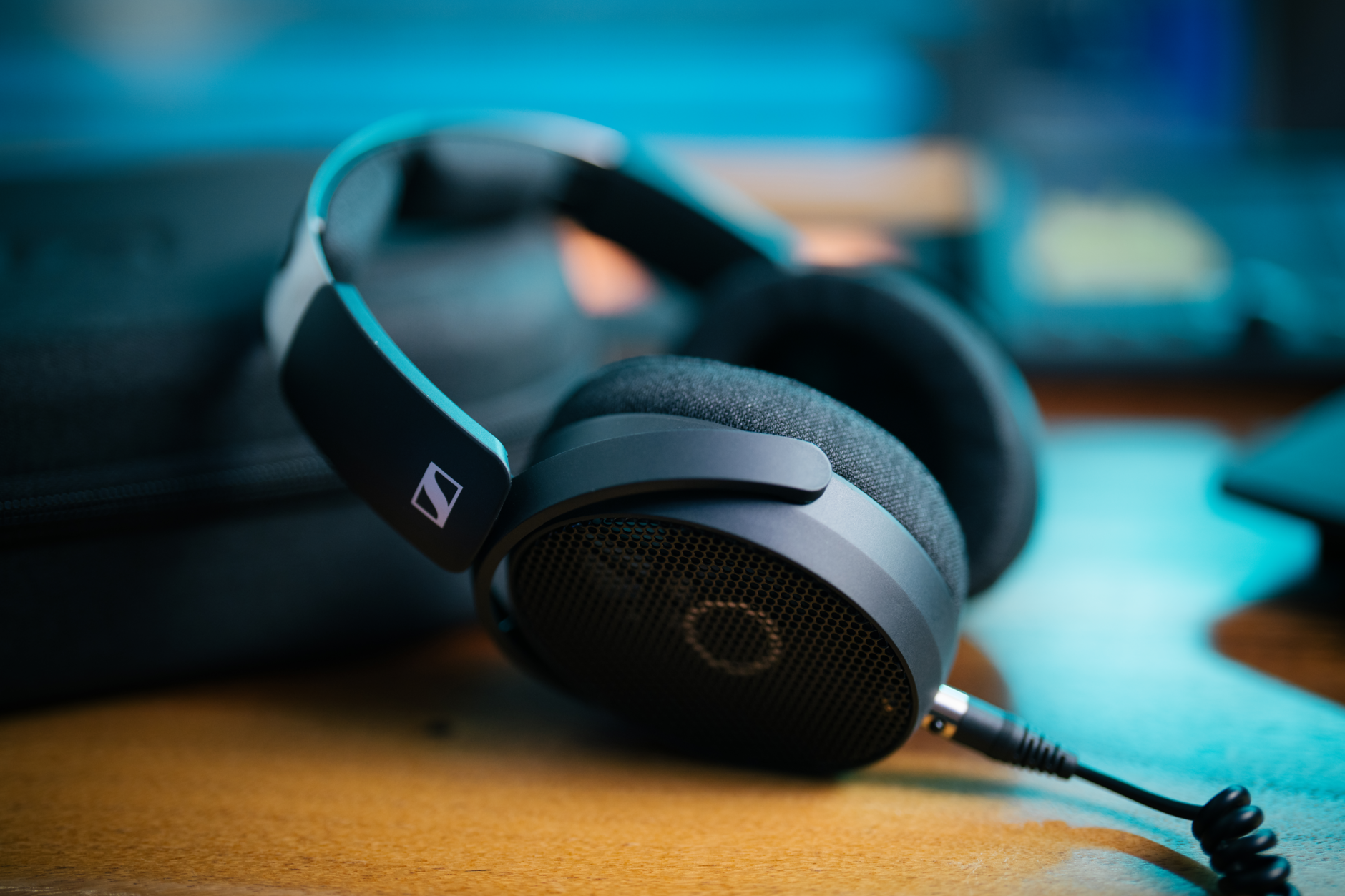
Open Earphones
Open earphones offer a more natural and airy listening experience compared to closed earphones. This type of headphone has cups that allow air and sound to pass freely, resulting in a greater perception of space and a wider stereo image. Open headphones are preferred by many mixing and mastering engineers because of their ability to provide a more accurate and balanced representation of sound.
The main advantage of open headphones is their ability to minimize listening fatigue by allowing the ear to breathe and reducing pressure buildup. This makes them suitable for long mixing and mastering sessions. However, due to their design, open headphones do not provide the same level of isolation as closed headphones. This means they are less suitable for noisy environments and are not recommended for live recording, where background sound and headphone feedback can be problematic.
Semi-open headphones
Semi-open headphones combine features of closed and open headphones, offering a balance between isolation and natural sound. This type of headphone has partially open cups, allowing a certain amount of air and sound through, while still providing some isolation. Semi-open headphones are a versatile choice for music production, as they can be used for recording as well as mixing and mastering.
The advantage of semi-open headphones is that they offer a better representation of space and stereo imaging compared to closed headphones, while still providing a decent level of isolation. This makes them suitable for situations where both isolation and natural listening are needed. However, like open headphones, semi-open headphones may not be ideal in very noisy environments due to their design that allows ambient sound to enter.
Become an expert in monitoring with the recommended book “Acoustings and monitoring in Music Production” (click on the image to go to the link):

In-Ear Monitors (IEMs)
In-ear monitors, or IEMs, are small earphones that are inserted directly into the ear canal. This type of headphone is widely used in live performances and by musicians on stage due to its excellent isolation and portability. IEMs provide a secure and comfortable fit, allowing musicians to move freely without worrying about interference from cables or bulky earphones.
In music production, IEMs can be useful for recording and reference, especially in mobile or home studio situations. They provide good sound representation with excellent clarity in the high and mid frequencies. However, due to their compact size, IEMs may not offer the same depth in the low frequencies as full-size headphones. In addition, prolonged use may cause hearing fatigue, so it is recommended to alternate between IEMs and other types of headphones during long sessions.