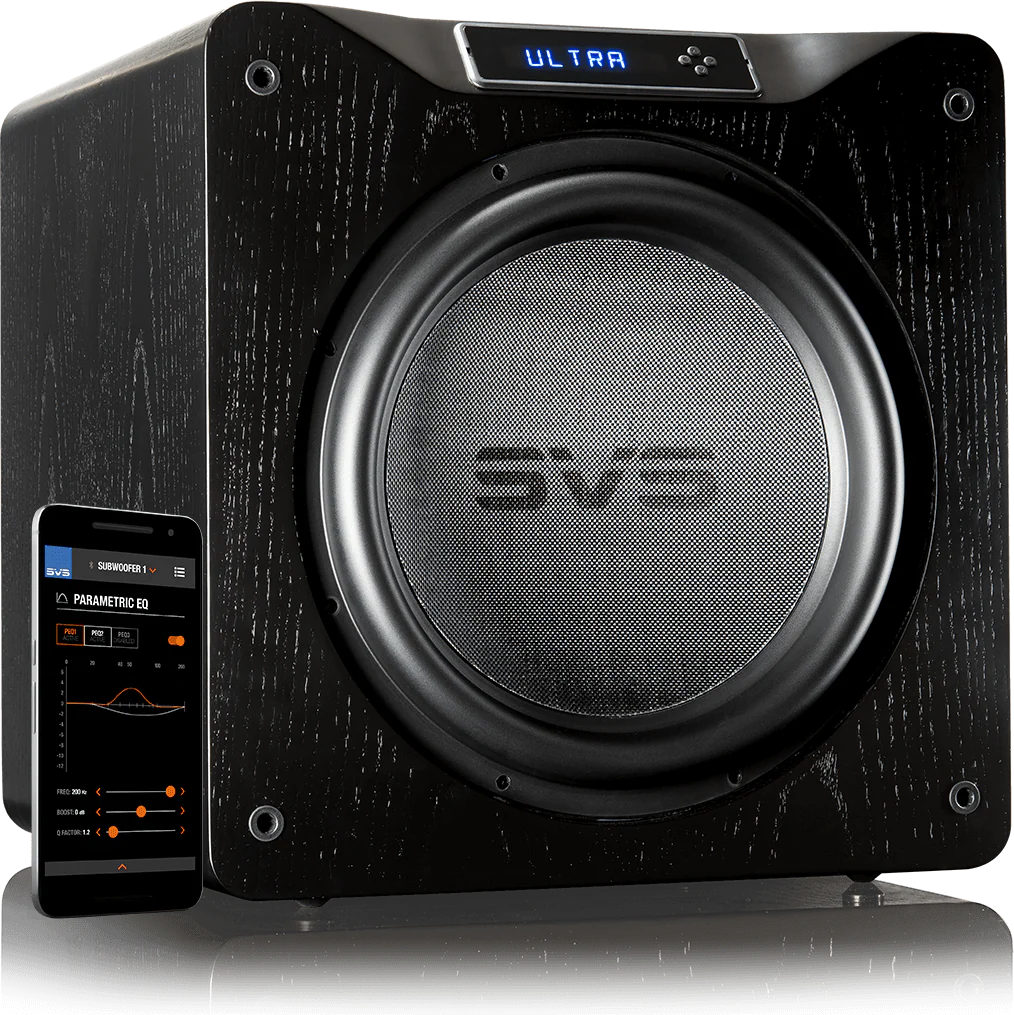
Phase and Crossover Adjustment
Phase and crossover adjustment is crucial for proper integration of the subwoofer into the monitoring system. Phase refers to the timing of the sound waves produced by the subwoofer and the main monitors. If the waves are misaligned, they can cancel each other out, resulting in a loss of low frequencies and unbalanced sound.
To adjust the phase of the subwoofer, a phase control can be used to temporarily align the sound waves. Many subwoofers have a phase dial that can be adjusted from 0° to 180°, or even a continuous adjustment. Listening to music with significant low-frequency content while adjusting the phase can help you find the point where the low frequencies are clearest and most powerful. In addition, using acoustic measurement software can provide an accurate visualization of how the sound waves are aligned, facilitating a more precise adjustment.
The crossover is the frequency at which low frequencies are redirected from the main monitors to the subwoofer. Setting the crossover correctly ensures a smooth and natural transition between the subwoofer and the monitors, avoiding overlap or gaps in the frequency response. A common crossover frequency is around 80 Hz, but this can be adjusted according to the specifications of the monitors and subwoofer. When making this adjustment, it is important to listen to reference material that contains a wide range of frequencies, making sure that the integration is cohesive and that there are no over- or under-crossovers in the low frequencies.
Considerations for Subwoofer Use
The use of subwoofers in a recording studio offers significant benefits, but also poses challenges that must be carefully managed. One important consideration is the placement of the subwoofer within the room. Low frequencies are less directional and can build up in certain areas, especially in the corners. Placing the subwoofer in a central position between the main monitors can help distribute low frequencies more evenly. However, each room is unique, and experimenting with different locations, combined with acoustical measurements, can help find the best position.
Room acoustic treatment is essential when using a subwoofer. Low frequencies can cause resonances and room modes that negatively affect sound quality. Using bass traps in the corners and on the walls can help control these frequencies and reduce resonance problems. In addition, the walls and ceiling should be treated with absorptive materials to minimize reflections that can interfere with low frequencies.
Become an expert in monitoring with the recommended book “Acoustings and monitoring in Music Production” (click on the image to go to the link):

The volume of the subwoofer should be carefully calibrated to ensure that the low frequencies complement the mid and high frequencies without dominating them. Too high a volume level can make the mix sound unbalanced, while too low a level can result in a lack of bass presence. Using an SPL meter to set the subwoofer volume to the same level as the main monitors can help achieve a proper balance.
Subwoofer integration should also be checked regularly with known reference material. Listening to recordings with a wide frequency range and good production quality can help identify problems in subwoofer integration. In addition, using acoustic analysis tools to measure the frequency response of the monitoring system can provide valuable information for fine-tuning.
It is important to remember that the use of subwoofers is not suitable for all situations. In some studios, especially in smaller spaces, it may be more difficult to control low frequencies effectively. In these cases, it may be better to opt for full-range monitors that provide adequate frequency response without the need for an additional subwoofer.