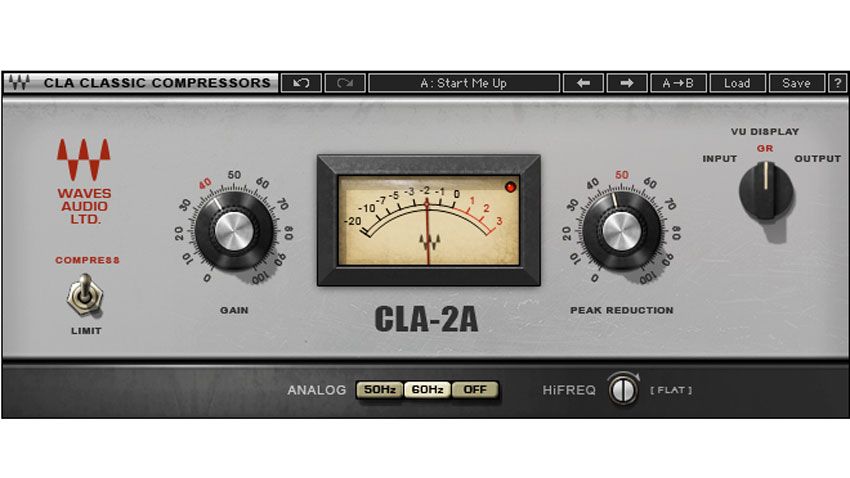
Audio compression is a technique used in music production to control the dynamics of an audio signal. This means adjusting the difference between the highest and lowest levels of the sound. In simple terms, compression makes loud sounds softer and soft sounds louder, achieving a sonic balance.
How Audio Compression Works
An audio compressor acts like an automatic volume controller. The basic steps of how a compressor works are described here:
- Signal Detection: The compressor monitors the incoming audio signal to identify when it exceeds a predetermined volume level called a threshold.
- Gain Reduction: When the signal exceeds the threshold, the compressor reduces the gain of the signal according to a specific ratio. For example, a 4:1 ratio means that for every 4 decibels (dB) that the signal exceeds the threshold, only 1 dB will be allowed to pass.
- Attack and Release: The attack time (attack) determines how fast the compressor responds to the signal exceeding the threshold. The release time defines how quickly the compressor stops reducing gain once the signal drops below the threshold.
- Output Gain Adjustment: After compression, the output gain can be increased (makeup gain) to compensate for the overall volume reduction.
Become an expert in compression with the recommended book “ Compression in Music Production” (click on the image to go to the link):
