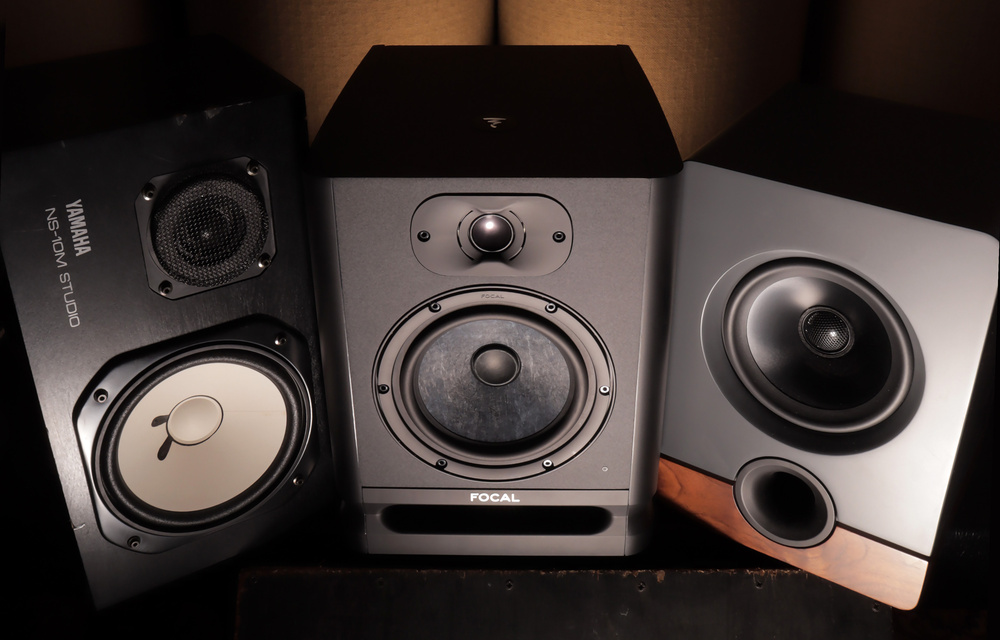
Calibrating studio monitors is an essential process to ensure that volume levels and frequency response are consistent and accurate. This involves adjusting the monitors to provide neutral sound reproduction, without exaggerating or attenuating any part of the sound spectrum.
To begin the calibration, a measurement microphone placed at the listening point is used, which captures the response of the monitors in the room. Connected to an audio interface and acoustic analysis software, such as Room EQ Wizard (REW), the measurement microphone allows the frequency response and behavior of the sound in the room to be analyzed.
The analysis software generates a frequency sweep that is played through the monitors. The microphone picks up how different frequencies behave in space and the software displays a graph of the frequency response. This plot reveals peaks and valleys in the sound spectrum, indicating where adjustments are needed.
One of the first steps in calibration is to adjust the volume level of each monitor to ensure that both produce the same sound pressure level. This can be done by using an SPL (sound pressure level) meter to measure and adjust the volume until both monitors reach the same level.
Become an expert in monitoring with the recommended book “Acoustings and monitoring in Music Production” (click on the image to go to the link):

Equalization adjustments can then be made using calibration software. Some active monitors have EQ controls on the back that allow you to adjust the low, mid and high frequencies to compensate for the acoustic characteristics of the room. The analysis software helps determine what adjustments are necessary to obtain a flat frequency response.
The use of monitor calibration systems, such as Sonarworks Reference, can simplify this process. These systems use a measurement microphone and specialized software to analyze monitor response and create a correction profile. This profile is applied to the audio signal, automatically adjusting the frequency response to compensate for acoustic irregularities in the room.
Once calibration is complete, it is important to listen to known reference material to verify that the adjustments made provide accurate and balanced sound reproduction. Final mixing and mastering decisions should be based on a reliable listening reference, so it is critical to ensure that the monitors are properly calibrated and positioned.