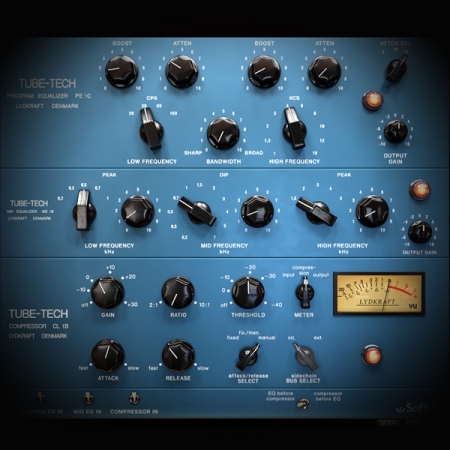
The setting of the threshold and ratio parameters is crucial to obtain the desired results when using a compressor. These parameters determine when and how much the audio signal will be compressed. The following describes how to set the threshold and ratio for different situations and types of instruments.
1. Vocals
Objectives:
- Maintain consistent dynamics.
- Avoid peaks and ensure that vocals remain present in the mix.
Settings:
- Threshold: Adjusts the threshold for compression to act on the highest peaks of the vocal signal. It starts around -10 dB and adjusts as needed to capture the peaks without overly compressing the softer parts.
- Ratio: A ratio of 3:1 to 4:1 is usually effective for vocals, providing moderate compression that controls the peaks without crushing the dynamics.
Example:
- Threshold: -10 dB.
- Ratio: 3:1.
2. electric guitars
Objectives:
- Control peaks and maintain a consistent level.
- Add sustain and presence.
Settings:
- Threshold: Adjusts the threshold for the compression to act on the highest peaks of the guitars. A good starting point is around -12 dB to -8 dB.
- Ratio: A ratio of 4:1 to 6:1 is common for electric guitars, providing firm and effective compression.
Example:
- Threshold: -10 dB.
- Ratio: 5:1.
3. Drums (Bass Drum and Snare).
Objectives:
- Control fast transients.
- Add punch and consistency.
Configuration:
- Threshold: Adjusts the threshold to capture the most pronounced transients, typically between -6 dB and -4 dB for the kick drum and snare.
- Ratio: A ratio of 4:1 to 6:1 provides adequate compression to control transients without crushing the sound.
Example:
- Threshold: -6 dB.
- Ratio: 4:1.
4. Bass
Objectives:
- Maintain a constant volume level.
- Add sustain and avoid excessive peaks.
Configuration:
- Threshold: Adjusts the threshold to capture the most dynamic parts, usually around -12 dB to -8 dB.
- Ratio: A ratio of 4:1 to 6:1 provides a tight compression that keeps the bass consistent and present.
Example:
Become an expert in compression with the recommended book “ Compression in Music Production” (click on the image to go to the link):

- Threshold: -10 dB.
- Ratio: 4:1.
5. Keyboards
Objectives:
- Control dynamics and maintain a constant level.
- Add body and presence without sacrificing note articulation.
Settings:
- Threshold: Adjusts the threshold to capture the steepest peaks, typically between -15 dB and -10 dB.
- Ratio: A ratio of 2:1 to 4:1 provides moderate compression to help control dynamics without losing the naturalness of the sound.
Example:
- Threshold: -12 dB.
- Ratio: 3:1.
6. Mix Bus (Master Bus).
Objectives:
- Cohesion of the whole mix.
- Control overall dynamics and avoid excessive peaks.
Configuration:
- Threshold: Adjusts the threshold for compression to act smoothly on the mix, usually around -2 dB to -1 dB.
- Ratio: A ratio of 2:1 to 4:1 is ideal for the master bus, providing subtle and cohesive compression.
Example:
- Threshold: -2 dB.
- Ratio: 2:1.
Additional Considerations
- Type of Music: Threshold and ratio settings may vary depending on the genre of music. For example, pop and rock music may require more aggressive compression compared to classical or jazz music.
- Performer Dynamics: The performance of the musician also influences the settings. A vocalist with a large dynamic variation may need different compression than a singer with a more consistent range.
- Testing and Adjustments: It is always important to perform listening tests and fine tuning. The ideal setup may require several attempts and adjustments depending on the response of the audio signal.
Setting the threshold and ratio properly is essential for effective and musical compression. Each situation and instrument has its own dynamic needs, and adjusting these parameters carefully can significantly improve the quality of the mix. Using these values as a starting point and adjusting them according to the specific needs of each track and mix is the key to effective use of compression.