The size of the room where you mix is a very important factor. Let’s say you have a studio that is five meters by five meters (length by width). We have a studio with a square area, which is one of the worst studio shapes you can have, since a square area means problems of frequency exaggeration and reflections, impossible to correct. Nor do we want a studio that is wider than it is long. Ideally, the studio should be longer than it is wide. This is where you will have a cleaner and clearer sound. The exact proportions were calculated by mathematical and acoustic experiments, which we will not explain here. We will give you the formulas and there you can calculate, roughly, what best fits what you can achieve in your studio.
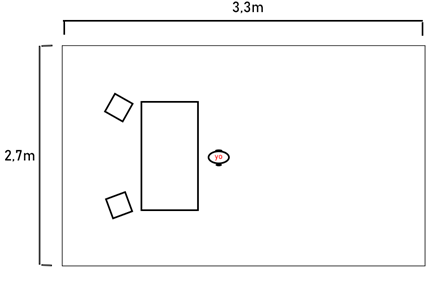
Example of correct proportion:
height (H) x width (W) x length (L).
2.4 m (H) x 2.7 m (W) x 3.3 m (L)
If we simplify it, we obtain that every 1 meter of width, we will have 1.62 meters of length.
Acoustic treatment
The first thing we can do to have good acoustics is to get rid of the most problematic reflections. We should not get rid of all the reflections. The human ear is used to receive sound in reflective environments. If we leave a studio completely devoid of reflections (by putting acoustic panels on all walls, ceiling and floor), we will leave the studio acoustically dead. The sound will be unnatural and strange to our ears. The ideal is to leave a studio with some acoustically treated areas and some free areas (untreated).
Main reflections to attenuate
Become an expert in monitoring with the recommended book “Acoustings and monitoring in Music Production” (click on the image to go to the link):

The first thing we will have to treat are:
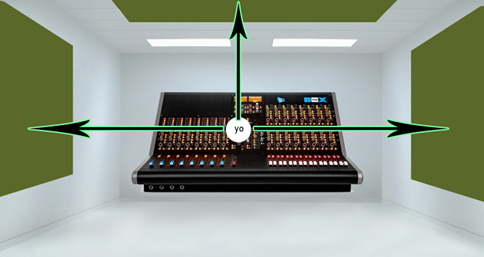
1- The zones on both sides of our head (drawing a straight line from our ears to the walls).
2- The area just above our head, on the ceiling.
The following image illustrates this zone of primary reflections:
The rectangles in color are the acoustic panels that we will put (later we will see the materials we can use for the panels).
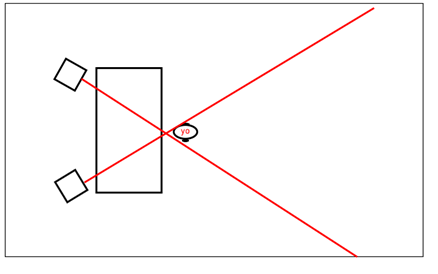
Another useful technique is to draw a straight line from the monitors. The sound will come out of the monitors and go to the walls. Seeing the area where this imaginary line touches the walls, there you will put an acoustic panel.
In the following image we will see this:
You may wonder why I haven’t mentioned the floor. It is an area whose reflections we can accept, since they keep the environment alive. Besides, treating a floor acoustically is usually more expensive.